[Image description: A hand painting a picture of a white flower]
Autistic people are capable of an entire spectrum of talents, skills, and abilities, and autistic people are found performing all of the roles in society that typical people perform. At the same time, there are many things that autistics are not able to do. Our profiles of abilities and disabilities varies from person to person. It is extremely disrespectful to assume that somebody is not able to do something because they are autistic. Such an attitude presents a low regard for autistic and disabled people and is far from reality.
The historic and ongoing views that autistic people will never reach the ability potential of a typical person contributes to continued ableism against autistic people. Autistic children, who are assumed to never be able to achieve education and career goals comparable to their classmates and peers, are afforded lower-quality educations and receive less supervision and encouragement. When an autistic child performs in a way that is comparable to or exceeds the skills of their peers, they are deemed to be “not that autistic” or “not as disabled”. This ableist perspective fractures our community, as autistics who demonstrate competence are classified as typical in order to maintain the status quo view that autistics are not competent. “Autistic” therefore remains a label of shame and incompetence when it should not be.
When people do not believe in the capability of autistics, we also lack faith in our own capability. We may fall into a depression about not being able to achieve what our peers do, when it was not because we couldn’t but because other people did not believe that we could. We may underachieve in school, not bother applying for jobs, not try making friends, because we have internalized that we are not capable of doing those things.
It is more likely that we are able to do all of those things that contribute to a high quality of life if we receive accommodations and if society becomes more accessible to more people. Sometimes it is not that we are incapable of public speaking, but that we are incapable of public speaking because nobody bothered to teach us public speaking skills because they thought we would not be able to grasp them. Sometimes it is not that we are incapable of problem solving and mathematics, but that we are incapable of sitting at a desk and writing out our thought process on paper.
Autistic people must always be presumed to be competent and able to perform a task or skill that would be expected of anybody else their age, unless the person communicates that they are disabled in that way. Each autistic person spends their life exploring what they are able and not able to do, and we understand our ability profiles better than anybody. When we do state that we are disabled from doing something, we must be believed. We have tried over and over; we just can’t do some things and not being believed hurts our sense of self. But there are many things that we can do, and our growth and development should be encouraged on a level that all of our typical peers receive.
[Image description: A white fidget spinner balanced on a finger]
The quality of life for an autistic is directly tied to our ability to self-stimulate, or “stim”. Stimming is the personal pursuit of sensory stimulation. It can be flapping our hands, dancing, twisting our necks, clapping, knocking, rocking, singing, chewing, saying our favourite words, making noise, or anything else that stimulates the body. Stimming can be done alone or with a group. Sometimes we stim with objects, like blowing bubbles or watching a lava lamp. We stim for happiness, for fun, for creative expression, for communication, for learning, for anxiety, and to feel safe. Stimming needs no reason, and has no underlying behaviour except the pursuit of a better quality of life.
Sometimes we stim when we are happy. A “happy dance”, “happy hands”, “happy feet” etc. often accompanies when an autistic person feels seen, when we see or hear something that makes us happy, and when our friends and loved ones are nearby.
Sometimes we stim to learn about the world. When we are told something, the knowledge comes to us as a cold product; it has no context or environment. We cannot experiment with it, see what happens when different force is applied, see what happens when it is placed in a different environment, or understand the important details. When we have something in our hands, we can run our own experiments on it and learn what we want to know. This is a form of stimming.
Sometimes we stim when we feel that we are in danger. Autistic people perceive danger in different ways than typical people, because we perceive the world through different senses. We are sensitive to sensations that other people are not, and de-sensitized to some things that most people are sensitive to. And each autistic perceives these senses differently than another. A fireworks show which may make some autistics panic from the bright lights and loud bangs might stimulate and entice another autistic person. A whistle being blown by a prefect during recess may make us feel that we are in danger, or energize us. Each person has a different sensory profile. Many of these sensations are not within our control. We can’t turn the fluorescent lights off in the grocery stores or the mall. We can’t stop people from beeping their car horns. We can only change what we do to keep ourselves safe.
The first thing that we should do when an unsafe sensory stimulation occurs is to remove ourselves from the situation if at all possible; to stop eating the food with the Bad Texture, to run from the unsafe thing and return to a place where we feel safe. If we have to stay in the unsafe environment, then we can use personal aids such as sunglasses to reduce the light coming into our eyes, ear defenders to protect us from harsh sounds, and wear our favourite gloves, clothes, and jackets to protect us from unsafe physical touch sensations. Stimming is something else that we can do to return ourselves to a feeling of safety. If we can stim, we are safe.
Every autistic can recall a time where we stimmed and were shamed for it by schoolmates, teachers, friends or family. This bullying has impacted the self-esteem of autistics, and lead to us feeling ashamed for being autistic. Having our stims shamed leads to us choosing not to stim; we forgo this healthy, self-regulating behaviour that helps us survive in a world full of unsafe feelings.
We must be free to stim at all times and in all places. Stimming must not be a reward for good behaviour, it must not be against the rules, and it must not be punished or shamed. It must be allowed and provided to us anywhere we go.
[Image description: An Alternative and Augmentative Communication placard with signs for various food and drink related words]
Traditional methods of communication, like spoken word, are often inaccessible to autistic people. Some autistics do not speak. Of those autistics who can speak, many of us find spoken word to be overwhelming to our senses and uncomfortable to do for long periods of time, if at all. Some members of our population go into “non-verbal space” and are drained of their capacity for spoken word when they are in sensory overload.
While speech language pathology is often prescribed for autistics that are disabled in spoken communication, and can be very helpful in bridging communication needs, normalizing mandatory speech rehabilitation as a default prescription is not inclusive or in the spirit of Autism Acceptance. Speech language pathology is a barrier to place on an autistic person as it is an extracurricular exercise they must take in order to accommodate typical society. Instead of placing the onus to “make up” for their disability on the disabled, we must make society more inclusive of the needs of people disabled by communication demands.
To achieve accessibility of communication, alternative communication must be widely understood and normalized. Alternative communication can come in the form of sign language, hand signals, writing, typing, symbols, pictures, and Alternative and Augmentative Communication as shown in the placard above. Alternative communication can be its own language, agreed upon by people who have never met each other, such as American Sign Language or written language, or it can be as simple as a hand gesture privately shared between two people who know each other.
Autistics call for the expansion of alternative communication so that more people are familiar with these communication styles and can reciprocate communication with them. Alternative communication must be normalized and held in the same regard as if the person using it was speaking.
Imagine that you were Laos, China, Columbia, or Brazil, where almost no English is spoken. If somebody had robbed you, how would you tell somebody you had been the victim of a crime? What communication would you use? Without a Google Translate, you would need to use your body language and behaviour.
But what if that body language, which we had used to attempt to communicate that you had been a victim of crime, in turn was interpreted as hostile? What if you were taken away by police and detained because that body language was so offensive it was making everybody else uncomfortable?
Many autistics do not communicate in traditional ways, and do not interpret communication in traditional ways. They are English-speakers in a country where English is seldom spoken or understood. How then, can they communicate to the world when something was making them feel uncomfortable, afraid, anxious, disturbed, neglected, abused, or powerless?
It is easy to understand why many autistics make the conscious or unconscious choice to communicate bad feelings with bad behaviour. Good behaviour is not seen and not regarded. Bad behaviour draws attention. It says, “pay attention to me, I need somebody to listen to me”. People don’t look at somebody smiling, with neutral body language, obeying rules and social norms, and see somebody who feels that they are in danger.
What happens, instead of being regarded and listened to, is that bad behaviour is punished. A person who is doing their best to communicate that they are in distress is put in further distress through punishment for their behaviour. This leads many autistic people to learn to not bother with communicating when they are uncomfortable, abused, or violated, because they expect that they will be punished for bothering neurotypical people with their needs.
Autism acceptance means to see the communication in an autistic person’s behaviour. It means to see the trashed home, the desks and chairs in a classroom being flipped over, the screaming and the destructive behaviour and to see that things are not okay in the autistic person’s world. It means it is time to de-escalate the conflict and then listen to what the autistic person is trying to say.
But for as long as autistic behaviour has been studied, the focus has been on “behavioural management”. The focus was on how uncomfortable autistic behaviour was making our neurotypical counterparts. The intention of autism therapy was to make autistic behaviour more acceptable to the senses of neurotypicals.
[Image description: Several bottles making up a shipment of the Miracle Mineral Supplement; a bleach-based pseudoscientific “treatment” for autism]
One hundred years of doctor labour, and millions and millions of dollars spent on a search for a cure with no results to show for it, has lead some families with autistic children to delve into the twisted world of snake oil merchants who promise miracle cures for autism. These merchants, who believe that they have solved puzzles that the smartest minds of the 20th and 21st century could not solve with their miracle cures, attract cult followings of consumers who believe their hype. Pseudoscientific treatments for autism include gluten-free diets, specialized diets, solutions made from cannabinoids (products extracted from cannabis plants), and multivitamin supplements.
Attempting to “cure” autism through medicine is, in the words of Bill Clinton, “like trying to nail Jell-O to a wall”. It is not physically possible, and we certainly should not be pouring fortunes of money into this endeavour. Medicine cures diseases, and autism is not a disease, it is a state of being.
I only wish that the snake oil that these merchants were selling was as harmless and neutral as its namesake. While gluten-free diets, specialized diets, cannabinoids, and multivitamin supplements will probably just give autistics a bodily cramp, there are some treatments that are poison to the body and cause physical harm to the imbiber.
An infamous case of a poisonous solution being peddled as an autism cure is the Miracle Mineral Supplement, or MMS. MMS is chlorine dioxide; bleach. There are parents throughout the world that are using bleach solutions on their autistic children in an attempt to treat their autism biomedically. Imbibing and injecting bleach into your children has all of the effects that you would expect.
There are also surgeons that, for a fee, will inject the feces of a neurotypical person into an autistic person. Why would anybody want to do that, or want to do that to their children? Because news outlets such as NowThis have stated that doing so will cure a person of their autism. While the surgery itself is illegal in Canada and the United States, it is unregulated in Latin America, and surgeons in Canada and the United States have been advertising their fecal transplant surgeries which take place in Latin countries.
Many jurisdictions in the world lack an authoritative body investigating non-traditional medicine, including many jurisdictions in Canada and the United States. This is how MMS, fecal transplants, and other harmful unscientific treatments have been allowed to be sold in our countries.
Autistics call for an expansion of authoritative bodies to investigate and crack down on pseudoscientific supplements, public education campaigns to let families know the dangers of these autism “treatments”, and an expansion of social services calls to investigate families known to be subjecting their autistic children to harmful medicines such as MMS. And please stop putting other peoples’ feces in your children.
[Image description: American Actress Jenny McCarthy featured in a Youtube video about “How to End the Autism Epidemic]
For one hundred years and up until the present day, the primary goal of Autism Awareness campaigns have been to search for a cure for autism.
Searching for a cure is the highest act of hatred towards autistic people. It is akin to searching for a cure for black skin, a cure for indigeneity, or a cure for homosexuality. The drive to cure something is motivated by the idea that what you are trying to cure is dispicable and should be eliminated for the good of society.
The elimination of autism is parallel to the elimination of autistic people from society, the silencing of autistic perspectives, and the extermination of autistic lives.
Many people may see autistic people struggling and feel our lives would be easier if we were not autistic. It is true that our lives would be easier if we were typical. Autism is a disabling condition that prevents us from doing certain things and causes barriers to us achieving certain things. I do not believe that a typical person would ever choose to be autistic. But it is who we are.
My autism is the source of barriers in my personal life, my education, my career, my love life, and my hobbies. But it is who I am. If my autism were taken away or cured, and I was without those barriers, I would not feel joy any longer. I would be living somebody else’s life. I would either be living a lie, or I would not be the person who I am right now. I love myself. I do not want to be anybody else.
That is what it means to have Autistic Pride. Autistic Pride does not mean that we do not suffer and that our autistic lives are happy all of the time. It would be an unchallenged argument to say that all autistics have pain and barriers related to their different brains. But that does not mean that we need a different brain. We need acceptance and support.
[Image description: a group of human-like figures joining hands, each one a different colour. The figures have words labelled on them such as “kind”, “generous”, “unique”, and “powerful”.]
The most effective, most ethical, most powerful, and least expensive treatment for autism is acceptance and compassion.
Instead of expensive treatment programs and pseudoscientific procedures that promise results that will never come, we are asking our communities to attempt the cost-free experiment of giving us their love and patience.
Our societies have never made an attempt to accept us yet. When autism was first studied in the early 20th century, our countries’ first reaction was to make it illegal to be autistic. The voices advocating for compassion and acceptance were drowned out by voices of people who saw profit in building institutions and prescribing therapy programs. The voices advocating for compassion and acceptance are still drowned out by organizations that see profit in fundraising for treatment services by causing a public moral panic about autism.
For 100 years our societies have believed that the only way to make life enjoyable for autistic people is to convert them into typical people with treatments and therapies. This has not worked. It has only brought trauma, pain, and shame to autistic people. It has made us want to hide who we are so that people will not pity us or treat us differently. It has forced us to wear a disguise to keep ourselves safe from prejudice and discrimination.
Acceptance has not been attempted yet because it is a difficult, personal process. There is a vulnerability that comes with attempting to love something you have been taught to fear. It is frightening to have somebody who is not like you sitting at your table. But there is nothing to fear. We are not dangerous, just different.
There is labour that comes with education and attempting to see the world through unfamiliar perspectives. When we tell you how we see the world, a lot of it is confusing. We completely understand that there is a lot of personal work involved in trying to learn the autistic worldview, because it was a lot of work for us to have to learn the typical worldview and practice it every day. It is just as confusing to us when you make us see the world through your eyes instead of our own.
But this difference in perspective is critical to the success of our communities. When people see the world differently, some see opportunities that not everybody else sees. Some see solutions to problems that not everybody sees. If we all see the world the same way, we will miss opportunities and solutions that could have been acted on if we chose diversity instead of conformity.
Embracing neurodiversity means loving neurodivergent people for exactly who they are, without needing them to change for your benefit. The most prominent way for a society to demonstrate its embrace of neurodiversity is to end this violent, expensive, hate-motivated search for a cure for autism.
[Image description: a propaganda poster from the Canadian National Committee for Mental Hygiene states that people with developmental disabilities contribute to crime, poor morality, and poverty.]
Institutional, cultural, and interpersonal violence against autistic people is an ongoing phenomenon in our world with a long history.
Many of the social institutions that a typical person uses like public schools, hospitals, grocery stores, workplaces, and public transportation, are inadequate to meet our unique needs. Autistic people require specialized services and more resources to meet their educational, medical, and personal needs, and to achieve a level of success in their goals comparable to neurotypical peers. In our social democracy, the state is responsible for ensuring that everybody in our society receives the education, health care, and community services that they need in order to thrive, and the specialized services that autistic and neurodivergent people require are the state’s responsibility. Because of this, the money that goes towards providing these services comes from tax dollars, and specialized services are a public expense that everybody chips in together for.
In the 20th century, a social policy called eugenics became very popular as a tax-saving measure. Taxpayers did not like that government money was going towards specialized services for disabled and neurodivergent people, and they wanted to stop being responsible for the health of people who could not pay for their own health services. In Alberta and British Columbia, in a majority of the United States, and in the fascist nations of the Axis Powers, eugenics laws were passed that legalized the sterilization of disabled and neurodivergent people so that they would stop having families, and in a generation there would be no neurodivergent people requiring support. In Canada, from the passing of eugenics laws in the 1930s until their repeal in the 1970s, over 2800 Albertans and over 200 British Columbians were sterilized under these laws.
Neurodivergent and disabled people were also confined to institutions and hospitals without consent. In these institutions they were tortured, abused physically and sexually, experimented on, and in many cases murdered. Many North American families with neurodivergent children did their best to hide their child’s divergent behaviours, and punished their children for expressing behaviours like echolalia and stimming, as a survival mechanism. If the state suspected neurodivergence, then social services would take the disabled person away and place them in an institution where they may never be seen again.
In these institutions, behavioural therapies to eliminate neurodivergence were tested and practiced. Modern monsters such as Bruno Bettelheim and Dr. Ivar Lovaas, the latter being the founder of Applied Behavioural Analysis, took the captivity of neurodivergent people as a sick opportunity to experiment on their behaviour. Denying their subjects food and sleep for expressing autistic behaviour, and employing torture tools and electric shocks, Lovaas sought a way to get autistic people to no longer express autistic behaviour. By cognitively associating autistic behaviour with torture, and neurotypical behaviour with reward, Lovaas conditioned autistic prisoners to hide their autistic behaviours for fear of punishment. This behavioural analysis, no longer employing torture tools but maintaining the spirit of punishing autistic behaviour and rewarding neurotypical behaviour, remains a widely-prescribed response to an autism diagnosis in Canada, the United States, and many other western nations. We are still in a cultural mindset that the best way to support an autistic person is to punish their behaviour.
Even though our Canadian institutions for disabled people were closed in the 1970s, their legacy lives on in how they have shaped cultural understanding of neurodivergence and disability. Historic and ongoing segregation from society has lead neurotypical people to mistrust, suspect, prejudice, and discriminate against neurodivergent people because they are the “other”; not a member of their community. Typical people have not had to know how to socialize with and connect with neurodivergent people because they had been segregated for generations. Crimes, discrimination, and hate against neurodivergent people are more permissible in society than crimes against typical people, and crimes against disabled people are continually mishandled or not investigated by law enforcement. With a marginalized voice and few people joining their cause for equal treatment in society, neurodivergent people continue to be disproportionately victims of repeated crime and abuse.
Because the lives and destinies of neurodivergent people have been for so long the property of the state, between social services and institutions for the disabled, there is a cultural understanding that disabled people cannot speak for themselves and need somebody else to speak for them. This policy of actively silencing disabled self-advocates has lead to a very harmful view that disabled and neurodivergent people do not know what is best for them, and cannot know what is best for them. There is a cultural view that they require a neurotypical advocate, whether that is a caregiver or a professional, to speak on their behalf. This silencing of our voices is violence.
When an autistic person attempts to speak on their own behalf, our cultural understanding is that this autistic is an outlier; it’s “not as bad” for them. This is where the term “high-functioning autism” comes from. As a culture we say that those who can speak for themselves, who can work, who can go to school in a typical classroom, and have so far made it in life with little support does not have the authority to speak on behalf of those autistics who they say requires an advocate, the so-called “low-functioning autistics”. But apparently a neurotypical professional does have that authority to advocate for autistics that an autistic self-advocate does not. It is a process of silencing, and a process of violence. There is no “high-functioning autism” and “low-functioning autism”. They are unscientific, supremacist cultural terms. There is only a community of autistic people, each with our own needs, each communicating in a different way, each in need of love, inclusion, and self-determination.
One human life is worth more than all of the treasures of the Earth. Ending anti-autistic violence means challenging the idea that a human life can be boiled down to the money they earn from the job and the taxpayer-funded services they require from their community, money in and money out. We are not in debt to society because we required specialized services to reach our goals and live healthy lives. We humans created society as a way to ensure that everybody received the support that each of us needed. Society serves humanity, not the other way around. Human lives are not valuable because they add more monetary value to their community than they utilized. Human lives are valuable because that is the bottom line of all morality.
Footnote: originally, I wanted the graphic for today to be the famous Aktion T4 propaganda poster from Nazi Germany, stating that disabled people cost the state 85,000 reichmarks over the course of their lifetime, which was used as justification to exterminate disabled people in camps to save money and lower taxes. When we use Nazi German propaganda to illustrate violence against marginalized minority groups, I do not feel that the message is strong enough. Eugenics didn’t end when we won the Second World War. Eugenics didn’t end when we stopped sterilizing disabled people and closed down the institutions. Eugenics is still happening today. We are still using the same language to refer to autism, neurodivergence, and disability that Nazi Germany was using in the 1930s. Anti-autistic violence is ongoing and has not stopped.
[Image description: a village harvests a field of wheat, with some workers cutting the wheat while others take a break and eat soup under the shade of a tree.]
When people first began working together to reach common goals like hunting large animals together and sleeping safely at night in the wilderness, we organized ourselves into tribes with a common story together. The stories that a tribe would write about itself, the songs that a tribe would perform, the language they spoke, what they preferred to eat, and their cultural behaviours, would come to define what that tribe was.
On Earth, there were autistic people in every tribe, and they worked as water gatherers, food foragers, hut builders, and storytellers just like everybody else. But lets pretend that all of the autistic people from all of the tribes were placed into one tribe together. They would learn to bond together, they would share stories about their lives that would be woven into a tribal story, they would write songs together, learn behaviours from each other, and develop a culture.
This tribal organization of autistic people is happening right now in our modern world, now that the Internet and technology infrastructure allow people from all over the world to speak to each other, even if they don’t share the same language, and even if they don’t speak at all. Technology has facilitated the autistic and neurodivergent people of the world to form integrated communities where we share our stories, share resources, and make friends. In developing our communities, we have developed customs, norms, icons, and cultural values. These customs and norms hold significant value to us, and it goes a long way in earning the trust of autistic people to respect these customs.
There is no book of Do’s and Don’ts about autistic cultural customs, and in fact I would say that we are too early in the process of developing our communities for a book on our current customs to still be relevant in a few years’ time. We are in a storming phase of organizing, and very little has been solidly established. It is advisable for people who are not autistic to instead ask an autistic involved in an autistic community questions about integrating culture and customs into shared spaces, rather than to assume anything.
Autism is not the only neurotype that is seeing an effort to build community and develop a unique culture; people with all kinds of neurotypes are finding community with people who have brains similar to theirs. People are gathering together under the banners of “Dyslexia”, “Down Syndrome”, “Attention-Deficit Hyperactivity Disorder”, and other neurotypes in order to find community with like-brained people. These communities are very significant, because we have lived many of each other’s experiences and we have an empathy for each other which people who have not had our experiences can only attempt. In some cases, different neurotribes band together to form a nation of neurodivergent or disabled people in the case of a spoon-sharing collective or a disability rights initiative.
But the history of the neurotribes has also been shaped by our encounters with the largest neurotribe of all, the neurotypicals; people who occupy the most common subset of abilities and communication styles. Throughout history, people from the neurotypical nation have attempted to shape the destiny of the autistic tribe using their superior voice in society, and oftentimes these attempts result in conflict and violence.
[Image description: 6 figures, showing the evolutionary progression from a monkey holding a simple tool to a human hunter with a bow and arrows]
The story of humanity’s origin, from the African apes that walked upright five million years ago to the modern Homo Sapien, was taught to us as a linear transition with this familiar graphic.
This is not how evolution works. Life is not on a road trip from ape genetics to human genetics. The genome responsible for our development expands in every possible direction that it can with each generation. Picture evolution as an explosion in three-dimensional space, rather than a line from one point five million years ago to another point in the present day.
With every generation of children, the genome experiments with what experiments and differences it can get away with, through the advantageous process of deviation. If a baby comes to full term, this experiment in deviation was a success. If that baby grows to become a full adult, able to create a new generation, and has children themselves, then the deviation was very successful, and most often the differences will be passed on to future generations as an inherited trait.
These experiments in deviation are an important part in the resilience of the species. If we all followed the same genetic pattern, copied and pasted from one person to another, one environmental catastrophe, such as a virus, that killed one person could potentially wipe out all humans. Long ago, the genomes that played with variation outlasted the genomes that did not dare deviate.
As deviation shaped the bodies of the modern Homo Sapien from our ape ancestors, so too did deviation shape our brains. Instead of a linear path of brain development, from Hominoidea (ape) to Homo Sapien, the genome explored new possibilities for the brain with each generation for millions of years. Few of these experiments in variation were successful, but the experiments that worked became the thousands, then millions, then billions of brain blueprints found throughout the human race today.
As each of us has a different body, due to this generational variety, each of us has a different brain. Each person has a different way of behaving, communicating, and perceiving the world around them. If we were in a state of nature.
Our understanding of autism in 2020 is that it is in 4 out of 5 cases a set of inherited traits, passed down from parent to child. Autism is not a disease, disorder, or genetic mistake; it is in most cases passed through the genome, the blood of our ancestors, just like our height, body shape, and skin colour. Not only that, given that 1 in 59 people in the world are autistic, we can say that autism is a most desirable trait in a partner. We can also speculate that since autism is a global phenomenon found in nations all over the world, all autistics can trace their heritage to a single ancestor; a single instance of variation, happening long ago before humans migrated out of our cradle in Africa 50,000 years ago.
Research on autistic genes in 2003 argues against the idea of a single autistic ancestor. When scientists attempted to locate the elusive “autistic gene”, for the purposes of searching for a cure for our diversity, they found that over one hundred genes were responsible for autism. These one hundred genes could not be tampered with, because the genes responsible for autism were also responsible for everything from the healthy maintenance of our internal organs to the thickness of our fingernails.
So perhaps without one gene to call the origin of autism, it is possible that we are not descended from a primal autistic ancestor that all autistics can trace their geneology to. Perhaps, instead of a family, we are a tribe.
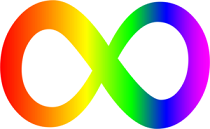


 Autistic Rights and Freedoms